
Sure Win Prediction Today Is Not a Guarantee — It's a Probability

Quick answer: A sure win prediction today is not a real guarantee, it is marketing language for a high-confidence football pick that still carries risk. Even the best AI football prediction models output probabilities, not certainties, because injuries, red cards, and match variance can overturn any pre-game estimate. Understanding this distinction protects your bankroll and sharpens how you read confidence ratings.
This page is educational risk guidance, not betting advice or a promise of returns. If betting feels hard to control, stop before placing another stake and use support such as the National Problem Gambling Helpline in the U.S. (https://www.ncpgambling.org/help-treatment/) or NHS gambling support in the UK (https://www.nhs.uk/live-well/addiction-support/gambling-addiction/).
> Definition: "Sure win prediction today" is a search phrase describing a football pick marketed as highly likely to succeed, but in statistical reality it refers to a probability estimate, not a guaranteed outcome.
TL;DR
- No football prediction, AI or human, can deliver a true sure win because outcomes are inherently uncertain.
- High-confidence picks still lose; the phrase "sure win" is confidence language, not a factual claim.
- Reading probabilities, comparing them with bookmaker odds, and managing bankroll are safer than chasing guarantees.
- AI models combine form, xG, injuries, and odds movement to estimate likelihood, not to promise results.
- Sites that advertise guaranteed predictions often cherry-pick wins and hide losses.
What the Sure Win Meaning Phrase Actually Refers To
The sure win meaning in football is a high-confidence pick, not a mathematical certainty. The phrase came from tipster marketing culture, where stronger wording made a pick feel safer than it really was.
A responsible forecast says something like: home win 64%, draw 22%, away win 14%. A “sure win” post often says the same thing with louder packaging. That is the problem. A probability estimate can be tested against results; a guarantee pretends variance does not exist.
Even a 90% probability pick should lose about once in every ten similar cases. That can be a late penalty, a rotated striker, or a centre-back tugging at a hamstring after a recovery sprint.
One bounce changes the ticket.
For anyone comparing claims, football prediction accuracy should be read as measured performance over many matches, not one confident sentence before kick-off.
Five Facts About Sure Win Predictions Every Fan Should Know
- No AI model produces a guaranteed football prediction. Machine learning outputs are probabilistic, so a model can rate a team as likely without making the result certain.
- High confidence is not certainty. Favorites lose regularly because football has low scoring, red cards, deflections, bad finishing, and tactical game states that shift after one goal.
- A safe prediction today still carries risk. Double chance, over 1.5 goals, and BTTS usually have lower variance than exact scores, but none of them removes match uncertainty.
- AI prediction tools combine inputs, not magic. Form, xG profile, injuries, odds movement, rest disadvantage, and matchup data all shape the estimate. Good ai football prediction tools deliver probability ranges, not guaranteed outcomes.
- Value comes from comparing probability with price. If a model gives a team 58% and the bookmaker price implies 50%, that gap matters more than a “sure win” label. The full evidence trail belongs in a football prediction track record, not in a screenshot after the match.
How AI Football Prediction Probability Works
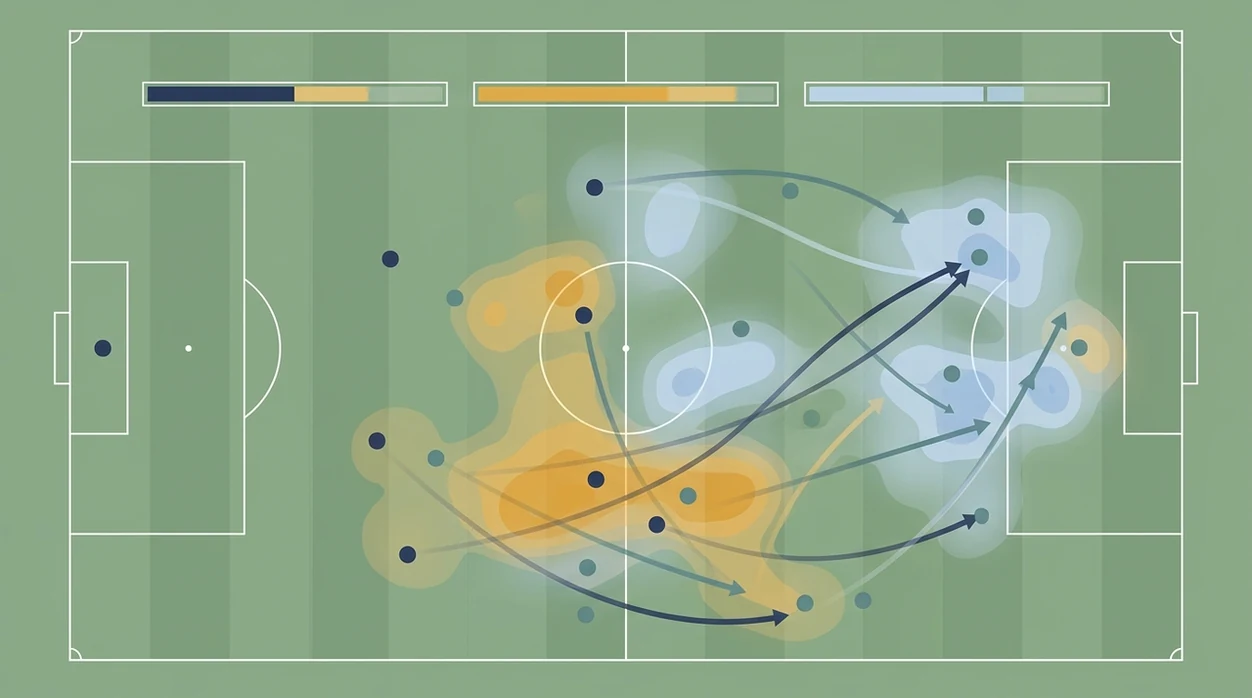
AI football prediction works by turning match information into a probability distribution across outcomes: home win, draw, away win, scorelines, BTTS, and totals. It does not reach 100% because football includes random events the model cannot know before kick-off.
Pew Research found in 2022 that 33% of U.S. adults had heard a lot about AI and 43% had heard a little, which explains the gap between familiarity and understanding source. In football terms, the model may understand chance volume, but it cannot know the referee will check his earpiece in the 86th minute.
Data Inputs That Shape Each Probability
Models ingest historical match data, xG, form tables, injury lists, odds movement, squad rotation, and home tilt. The team sheet dropping about an hour before kick-off can move the BTTS read if a starting full-back is missing.
For model context, expected goals is commonly used to estimate chance quality rather than simply count shots; see StatsBomb's xG explainer for the underlying concept: https://statsbomb.com/soccer-metrics/expected-goals-xg-explained/.
Why No Model Can Reach 100% Confidence
A Poisson-style score model estimates goal likelihood from chance quality and expected goals. Stale lineups or missing injury updates reduce reliability. Responsible tools show ranges; tipster hype hides uncertainty.
The Guaranteed Prediction Myth and Why It Persists
The guaranteed prediction myth persists because certainty is easier to sell than probability. It also fits how people behave online, where a bold claim travels faster than a careful confidence interval.
Myth 1: “Sure win” means the match is fixed or mathematically guaranteed. False. A forecast is not inside information, and fixed-match claims are a major red flag.
Myth 2: AI predictions beat the market every time. False again. Strong models still lose many individual bets because variance clusters. Bad weekends happen.
Myth 3: High probability equals safe prediction today. Not quite. A 75% pick can still lose one in four times across similar cases.
Myth 4: More confident wording means better accuracy. It doesn't. Problem-gambling guidance warns that chasing losses, believing you have found a system, or betting more than intended are risk signals, not signs of sharper prediction skill: https://www.nhs.uk/live-well/addiction-support/gambling-addiction/.
The UK Gambling Commission reported that online gambling made up 38% of British gambling expenditure in 2022 to 2023, showing how much decision-making now happens on screens source.

Safe Prediction Today: Lower-Risk Football Markets Explained
A safe prediction today usually means a lower-variance market, not a risk-free one. Double chance gives two match results instead of one. Over 1.5 goals needs two goals rather than a specific winner. BTTS depends on both teams creating enough shot quality.
Lower odds usually mean higher implied probability. For example, odds of 1.40 imply roughly 71.4% before margin. That still leaves a real losing slice, and the price may be too short to hold long-term value.
The useful move is simple: compare model probability with market-implied probability. If your forecast says over 1.5 goals is 76% and the price implies 72%, there may be value. If both say 76%, there is no hidden edge.
For cautious readers, responsible football prediction starts with limits, not confidence.
Sure Win Prediction Today vs. Responsible Probability Reading
There are two paths: chase guaranteed tips, or learn to read confidence ratings. The first path depends on someone else’s wording. The second path asks what the probability actually says.
Misleading tipsters often use 100% claims, hidden loss records, countdown pressure, “VIP fixed” language, and screenshots that only show winners. Responsible AI tools show probability ranges, tracked records, score distributions, and known limits.
Tools like AI Soccer Predictor can be useful when they frame a match as a probability report: win chance, correct score range, BTTS lean, over-under view, and confidence rating. They are not guarantees. The same standard applies to AI football prediction accuracy results, which only mean something when losses stay visible.
The pocket check is real. Refreshing the lineup at 2:55 p.m. tells you more than a shouting headline.

What Sure Win Claims Do Not Cover
Sure-win language does not cover the events that wreck pre-match estimates. It ignores in-play variance: red cards, muscle injuries, weather shifts, deflected shots, and a goalkeeper having one of those nights.
It also does not protect against data lag. Lineups and injury reports can change minutes before kick-off, and a striker absence flashing in a lineup feed can turn a strong over into a weaker position.
No sure-win claim includes bankroll management. You still need limits, staking rules, and the discipline to stop after a loss. Anonymous tipster sites often disappear after bad runs, then return under a new name with a clean-looking record.
A probability tool can help structure the read, but the final risk decision is still yours.
Responsible Gambling: When to Stop or Seek Help
Stop betting when it starts to feel harder to control than to enjoy. Prediction confidence, even from a strong model, should never overrule your personal limits, your budget, or a clear decision to pause.
Warning signs include chasing losses, hiding bets from other people, raising stakes after a bad result, borrowing to bet, or feeling restless when you try to stop. If any of those are familiar, treat that as a signal to step back before the next fixture.
- Pause before placing another bet, especially after a loss or a late-match swing.
- Set deposit limits, loss limits, and session reminders inside your betting account.
- Use time-outs or self-exclusion if short breaks are not enough.
- Tell someone you trust if you are hiding betting or feeling pressure to recover money.
- Contact national support resources such as the National Problem Gambling Helpline in the U.S. at https://www.ncpgambling.org/help-treatment/ or NHS gambling support in the UK at https://www.nhs.uk/live-well/addiction-support/gambling-addiction/.
Sources Used for This Safety Guidance
This safety guidance draws on gambling-harm resources and football-statistical concepts, not on bookmaker promotions or tipster sales claims. The examples are included to explain risk, probability, and variance; they are not staking instructions.
The page uses problem-gambling guidance from national support bodies such as the National Council on Problem Gambling and NHS gambling support, plus regulatory context from the UK Gambling Commission. For football modelling language, it refers to common statistical ideas such as implied probability, expected goals, Poisson-style score estimates, and tracked accuracy over batches of matches.
- Separate evidence from marketing by treating “sure win” as a claim to test, not a result to trust.
- Read model outputs as probabilities, where a 70% view still includes a meaningful losing side.
- Compare those probabilities with bookmaker-implied odds without assuming either side is automatically correct.
- Use examples as classroom-style illustrations, not as recommendations to raise stakes or chase losses.
- Review the cited safety and statistical sources whenever this page’s guidance changes, especially where support contacts, regulatory figures, or modelling explanations are updated.
Limitations
No football prediction system can produce a true sure win. That is the central limitation, not a footnote.
- Injuries, red cards, finishing luck, penalties, and tactical changes can overturn a strong pre-match estimate.
- AI prediction is only as good as its data; stale lineups or missing injury updates reduce accuracy.
- Lower-risk markets are not risk-free; low-odds picks still lose and can offer poor long-term value.
- Many tip sites cherry-pick wins and hide losses, so headline hit rates are misleading without full tracked records.
- Overreliance on guaranteed prediction marketing can encourage poor bankroll decisions and loss-chasing.
- A correct score prediction has wider variance than a 1X2 or totals forecast because it needs the exact goal count.
- Weather matters. Wet turf under floodlights can take pace off through-balls and change chance quality.
If betting is involved, use fixed limits and read responsible gambling for football fans before treating any model output as a staking signal.
FAQ
Is a sure win prediction guaranteed?
No. A sure win prediction is not guaranteed because football outcomes depend on uncertain events such as injuries, red cards, finishing variance, and tactical changes.
What does sure win meaning refer to?
Sure win meaning usually refers to a high-confidence football pick. It is marketing language, not proof that the outcome is certain.
Can AI predict football results perfectly?
No. AI football models output probabilities across possible outcomes, not perfect results.
What is a safe prediction today?
A safe prediction today usually means a lower-risk market such as double chance, over 1.5 goals, or BTTS. These markets can still lose.
Why do guaranteed prediction sites exist?
Guaranteed prediction sites exist because certainty sells attention. Many rely on hype, selective screenshots, and hidden losing records.
How do I spot a fake tipster?
Red flags include 100% claims, fixed-match language, hidden losses, urgency pressure, and no public track record. Treat those claims as marketing, not evidence.
Do favorites always win in football?
No. Favorites win more often than underdogs, but they still lose regularly because football has low scoring and high variance.
How should I read prediction confidence ratings?
Read confidence ratings as probability ranges, then compare them with bookmaker-implied odds. If betting, set a bankroll limit before acting on any forecast.