
Can Football Predictions Guarantee Wins? The Sure Win Myth Exposed

Quick answer: For anyone asking “can football predictions guarantee wins,” the answer is no: no AI model, tipster, or algorithm can know future match results with certainty because injuries, tactical changes, red cards, weather, and randomness always intervene. Any claim of a guaranteed football prediction is either a misunderstanding of probability or an outright scam. Legitimate prediction systems estimate probabilities and confidence ratings, never certainties.
> Definition: A guaranteed football prediction is a claim that a specific match outcome is 100% certain before kickoff. No credible model, bookmaker, or data scientist supports that claim because football results are inherently probabilistic.
TL;DR
- No prediction system, human or AI, can deliver prediction certainty for football matches.
- Legitimate AI football prediction tools communicate probabilities, such as 65% win likelihood, never sure wins.
- Only a small minority of sports bettors are long-term profitable; one large bwin customer study found that 1.3% finished in profit after 18 months: https://doi.org/10.1080/14459795.2013.829515.
- Any service marketing “fixed” or “100% guaranteed” football tips is misleading or fraudulent.
- Disciplined probability thinking beats chasing the sure win myth every time.
At a Glance: 5 Facts About Guaranteed Football Predictions
- No system can guarantee football match outcomes. A keeper stretching by the penalty spot, one awkward landing, or a second yellow card can change the whole probability map.
- AI models estimate probability, not certainty. A model may price a home win at 62%, but that still leaves 38% for the draw or away win.
- Bookmaker odds include a margin. The overround means public odds are not neutral truth; they are prices shaped to protect the book.
- Long-term profit depends on small edges and discipline. For serious analysts, bankroll control matters more than one correct score prediction landing on a Saturday.
- “100% guaranteed” and “fixed match” language is a scam warning. Real forecasting shows uncertainty bands, not magic answers.
The copy-paste takeaway is simple: football predictions can estimate likely outcomes, but they cannot remove variance from a live match.
Safety Scope: Predictions Are Not Betting Advice
Football predictions are probability estimates, not instructions to place a bet. A forecast can say one outcome looks more likely than another, but it cannot decide what is safe, affordable, or sensible for you.
That boundary matters most when money is involved. Readers remain responsible for any betting choices they make, including losses, missed cash-outs, and decisions made after a bad run. A model output should never be used as a way to win back previous gambling losses; chasing recovery often turns one poor result into a larger problem. Football analysis is also separate from financial, legal, or medical advice, even when it discusses risk, odds, or decision-making.
Use the scope like this:
- Read each prediction as a probability view, not a command.
- Check whether any stake would be affordable to lose in full.
- Avoid increasing bets to recover earlier losses.
- Separate match analysis from personal finance, legal duties, or health decisions.
- Stop if betting starts to feel urgent, emotional, or difficult to control.
What 'Guaranteed Football Prediction' Actually Means
A guaranteed football prediction means someone is claiming a match outcome is certain before kickoff; in football forecasting, that claim is not credible.
Searchers often mix up high confidence with certainty. A 90% probability sounds almost finished, but it still loses once in ten similar cases. That is the part people skip when the draw probability is circled in red and the favourite badge looks obvious.
Probability is a measured estimate. A guarantee is a promise. Those are different things.
Tools like AI Soccer Predictor can present AI probabilities, score forecasts, and confidence ratings, but the honest version never calls a match a guaranteed win. Good AI football prediction tools deliver probability ranges and uncertainty, not guaranteed wins. For a deeper breakdown of hit rates, the practical baseline is covered in football prediction accuracy.
How AI Football Prediction Models Actually Work
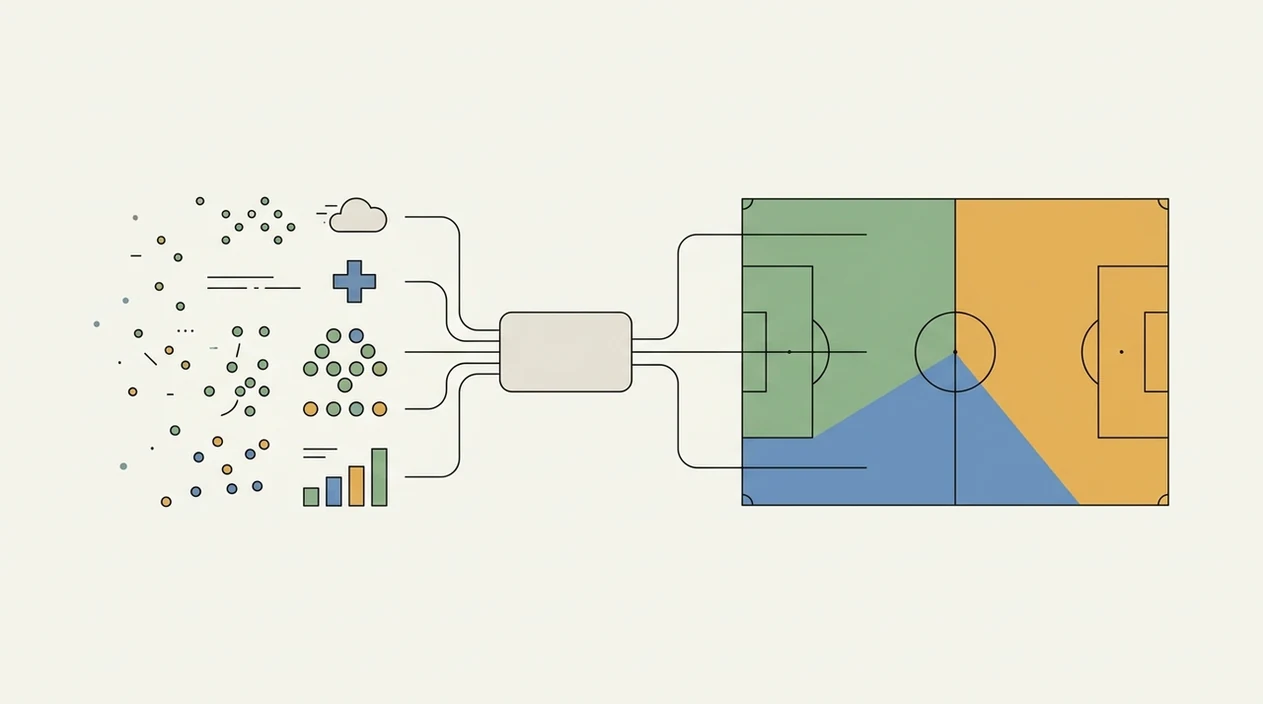
AI football prediction models work by turning match data into probability distributions, usually through statistical modelling, machine learning, or Poisson-style score estimation. The output is a range of likely outcomes, not a binary truth.
Data Inputs and Probability Outputs
A typical model weighs historical results, team form, player stats, expected goals, injuries, rest disadvantage, home tilt, set-piece threat, and likely lineups. It may project expected goals for both teams, then map those numbers into scorelines such as 1-0, 1-1, or 2-1.
The team sheet dropping about an hour before kickoff matters. One missing full-back can change the BTTS read because the replacement may not defend the back-post run well.
Why Hidden Variables Prevent Prediction Certainty
No model fully sees dressing-room tension, undisclosed knocks, tactical surprises, or wet turf taking pace off through-balls under floodlights. Even sophisticated models rarely beat bookmaker implied probabilities by more than a few percentage points over time, according to sports-market research.
That is why outputs should be percentages and confidence ratings. Not guarantees.
Common Myths About Sure Win Football Predictions
The sure win myth survives because people remember clean wins and forget variance. A favourite scoring early feels like proof, but one deflection in stoppage time can turn the same prediction into a loss.
The Winning Streak Fallacy
A long winning streak does not prove prediction certainty. It may show decent modelling, lucky sequencing, weak opponent selection, or selective posting. Ten correct calls in a row can happen without a model knowing the eleventh match.
The pub TV glow makes this worse. When a 90th-minute prayer lands, people call it skill faster than they call it variance.
Survivorship Bias in Tipster Track Records
Tipster pages often display the surviving winners and bury the failed runs. That creates survivorship bias. Overfitting also appears when a model is tuned too tightly to past matches, then struggles when new tactical patterns arrive.
A site claiming 90% or 95% historical accuracy should show sample size, market type, closing odds comparison, and loss history. Without that, the number is decoration.
Why Bookmaker Odds Already Rule Out Prediction Certainty
Bookmaker odds already include sophisticated modelling, trader judgment, market movement, and a built-in margin called overround. That structure makes public prediction certainty mathematically unrealistic.
Market efficiency means odds usually absorb most public information: injuries, form, fixture congestion, travel, weather, and lineup rumours. If a public guaranteed system existed, prices would move until the edge disappeared. The market does not politely leave free certainty sitting there.
Research on football betting markets has found that bookmaker odds are strong forecasts of match outcomes, even though they include margin; see Forrest, Goddard, and Simmons on odds-setters as forecasters: https://doi.org/10.1016/j.ijforecast.2004.11.003. A separate bwin customer study found that only 1.3% of bettors were profitable after 18 months: https://doi.org/10.1080/14459795.2013.829515.
For most readers, comparing model probability with implied odds is better than chasing sure wins because it shows whether the price is fair. The harder numbers sit behind AI football prediction accuracy results, but they still point to probability, not certainty.

Should You Trust a Site Claiming Guaranteed Football Predictions?
No, you should not trust a site claiming guaranteed football predictions. “100% guaranteed,” “fixed match,” “never lose,” and “sure win today” are red flags, especially when the page asks for payment before showing evidence.
Green flags look different. They include probability ranges, transparent methodology, archived results, honest loss disclosure, and plain explanations of uncertainty. A real forecast might say 58% home win, 25% draw, 17% away win. It will not say the match cannot lose.
Guarantee language is not harmless because it can encourage chasing behavior after losses. If betting feels hard to control, use a national gambling helpline or a support service such as BeGambleAware: https://www.begambleaware.org/.
AI Soccer Predictor treats forecasts as probability reports with confidence ratings, not instructions. Readers who feel pressure to recover losses should use a responsible football prediction framework before opening another match card.
When to Seek Gambling Support
Seek gambling support as soon as betting around predictions starts to feel urgent, secretive, or hard to stop. A forecast should never make you feel trapped into staking more, hiding activity, or trying to win back money.
Warning signs include chasing losses after a bad result, increasing stakes to feel the same excitement, borrowing money to bet, lying about betting activity, checking odds during work or family time, or feeling anxious when you cannot place a bet. Guarantee claims can make this worse because “sure win” language turns probability into pressure. When a promised result loses, the next bet can start to feel like a repair job rather than a choice.
If prediction use is becoming compulsive, take practical steps before opening another match card:
- Pause football prediction and betting activity for a clear cooling-off period.
- Tell someone you trust what is happening, especially if you have hidden losses.
- Contact a national gambling helpline or local support service for confidential guidance.
- Use bookmaker blocking, deposit limits, time-outs, and self-exclusion tools.
- Avoid any site or tipster using guaranteed-win language while you reset.
Probability Thinking vs. the Sure Win Myth in Football
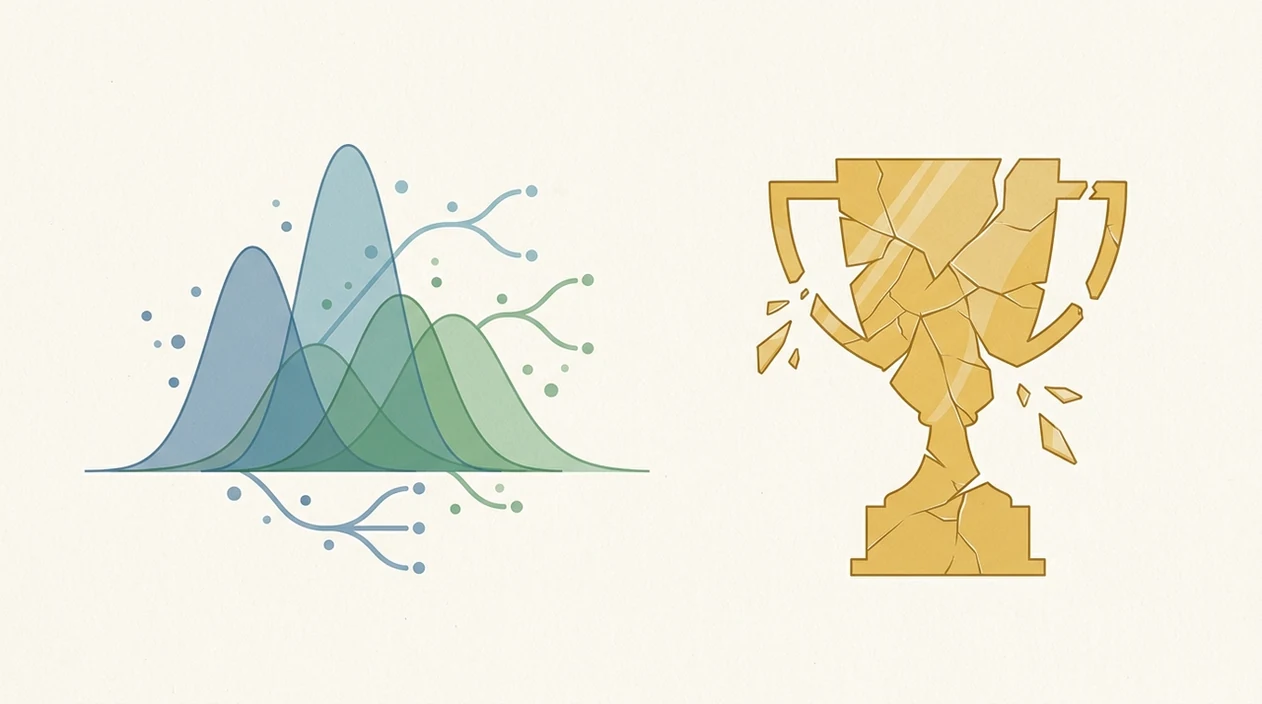
Can a 70% football prediction still lose? Yes: a 70% prediction means the same type of outcome fails about 30 times in 100, assuming the model is well calibrated.
Expected value is the gap between a model’s estimated probability and the price offered by the market. If a team is priced as 50% likely but your model estimates 56%, that may be a small edge. It is not a promise. It may still lose today and win over a long sample.
The mind hates that. Confirmation bias makes us notice the calls that fit our view. The illusion of control makes a lineup refresh at 2:55 p.m. feel like control, when it is only more information.
Legitimate AI Soccer Predictor ai football prediction pages should show uncertainty openly through confidence meters, score distributions, BTTS ranges, and over-under views. Long-term edge needs hundreds of predictions, not one supposedly safe bet. For daily match context, football prediction today should be read as a probability board.
Limitations
No football prediction model can overcome every uncertainty in a live match. The honest answer includes several hard limits:
- Data quality varies. Lower-league injury news, minutes restrictions, and tactical roles are often incomplete.
- Hidden team information matters. A centre-back tugging at a hamstring after a recovery sprint may not appear in public data before kickoff.
- Backtests can mislead. Overfitting and selective reporting can make old results look cleaner than real future performance.
- Short perfect records are weak evidence. They are usually luck, cherry-picked samples, manipulated reporting, or tiny samples.
- Value betting can still suffer long losing runs. That makes it psychologically and financially difficult, even when the process is sound.
- Regulation gaps limit verification. Users often cannot fully audit provider claims or private datasets.
- Markets adjust. No public model stays ahead indefinitely once enough bettors copy the same edge.
For football bettors, probability discipline is often safer than result-chasing because it forces every forecast to admit what it cannot know. If betting is involved, read the wider betting risks in football prediction before treating any model output as a decision.
FAQ
How accurate are football predictions?
Top football prediction models often land around 50% to 60% on standard match outcomes, depending on league, market, and sample size. No credible model reaches 100% accuracy.
Do AI football predictions guarantee wins?
No AI football prediction can guarantee wins because football contains injuries, red cards, tactical changes, weather effects, and random finishing variance. AI Soccer Predictor should be read as a probability tool, not a certainty machine.
Which prediction site has 90% accuracy?
Claims of 90% or higher accuracy are usually inflated by selective reporting, short samples, or easy-market cherry-picking. A trustworthy site should show its full football prediction track record, including losses.
Why do most bettors lose long-term?
Most bettors lose because bookmaker margins, efficient odds, poor bankroll control, and chasing losses work against them. A large gambling evidence review found that only about 1% of bettors were long-term profitable.
Are fixed match tips real?
Most fixed match tips sold online are scams. Genuine match-fixing is rare, illegal, and not something credible prediction sites can verify or sell.
Can you win using bookmaker odds?
It is possible to find value when your estimated probability is higher than the market’s implied probability. However, value betting still involves variance and long losing runs.
What makes a football prediction trustworthy?
A trustworthy football prediction shows probability ranges, model factors, archived results, and honest loss disclosure. It avoids guarantee language and explains uncertainty clearly.
Is there an app that guarantees football wins?
No app can guarantee football wins. Legitimate apps, including AI Soccer Predictor, provide probabilities, confidence ratings, and score forecasts rather than sure wins.