
World Cup Score Prediction: AI Scorelines, Probabilities & Forecast Rankings

Quick answer: World Cup score prediction uses AI models to rank the most likely exact scorelines for every FIFA World Cup match, giving fans probability-weighted forecasts instead of single guaranteed picks. AI Soccer Predictor ai football prediction generates these scoreline rankings by combining historical tournament data, team form, and contextual features, then displaying confidence ratings so readers know how uncertain each forecast really is.
> Definition: World Cup score prediction is the process of estimating the exact final scoreline of a FIFA World Cup match before kickoff by assigning probabilities to every plausible result, such as 1-0, 2-1, or 0-0.
TL;DR
- Exact-score forecasting is much harder than picking a match winner because you must predict goals for both teams.
- AI models rank scorelines by probability. No tool can guarantee a single correct score.
- World Cup matches average under 3 goals per game, making low-margin scorelines like 1-0 and 1-1 the most common outcomes.
How world cup score predictions look
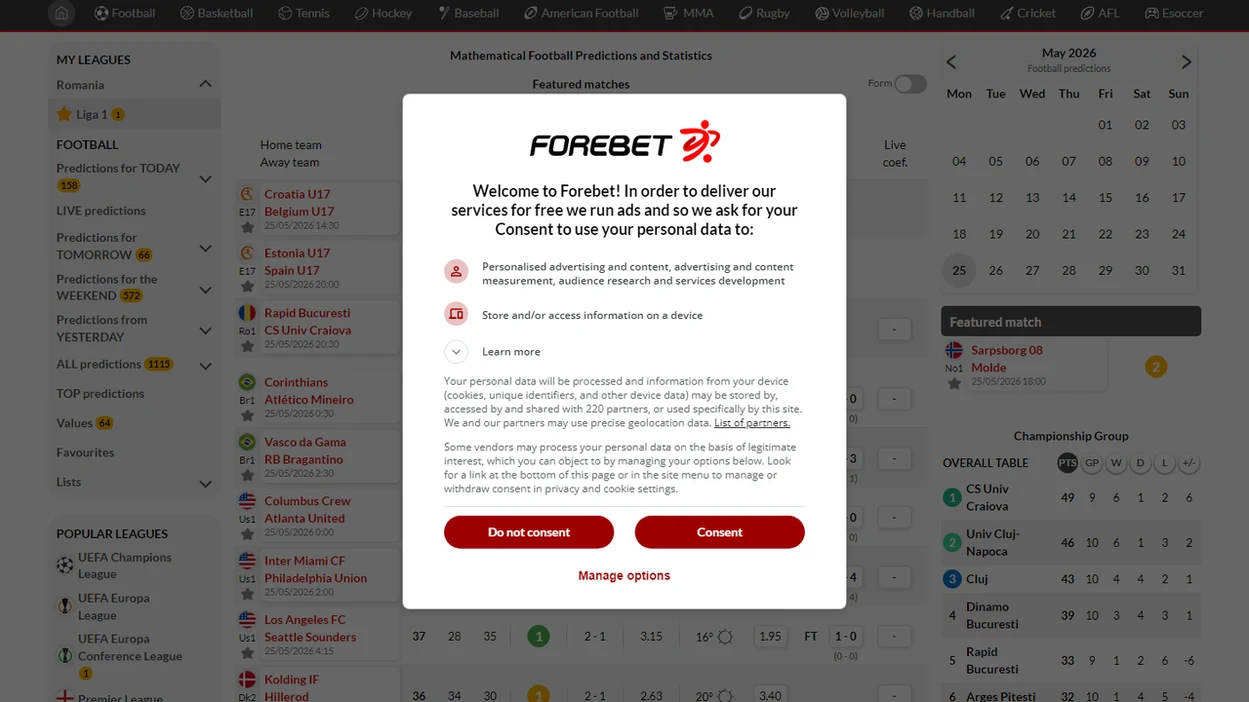
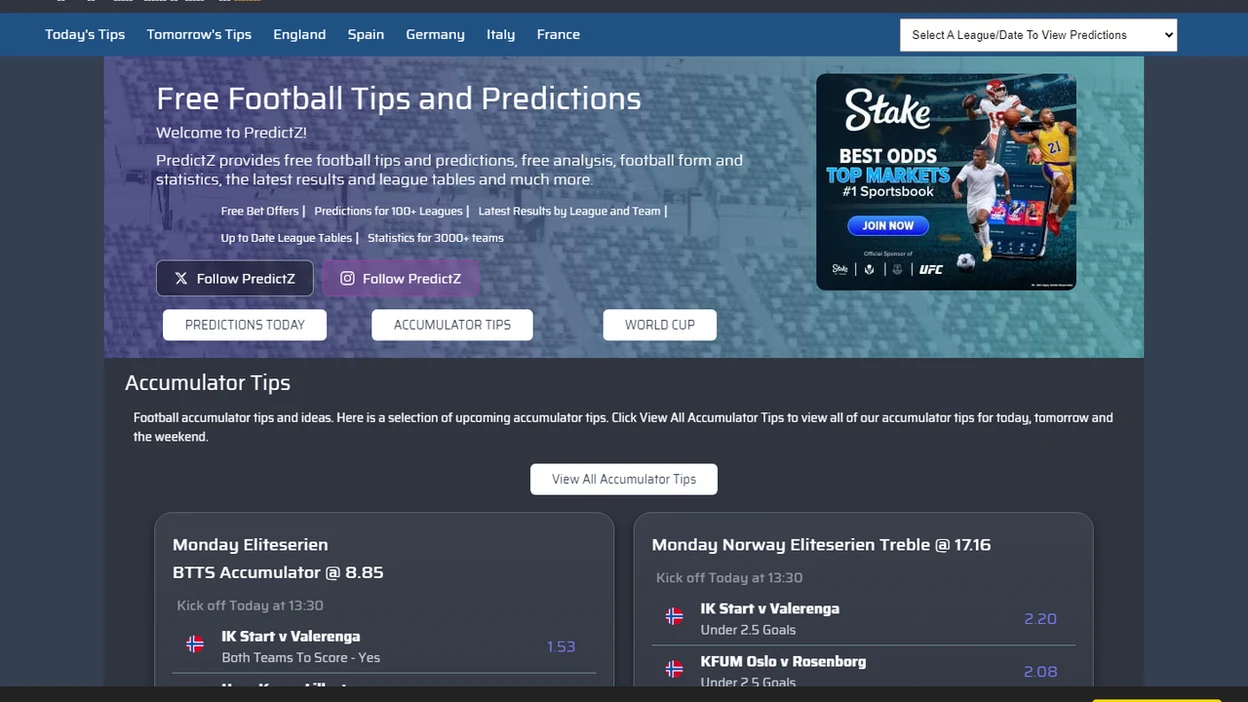
Side-by-side captures of the compared products. Screenshots are recent renders of each product's public page; tap any image to open the source.

3 World Cup Score Prediction Essentials at a Glance
- Exact-score forecasting predicts both teams’ goal totals, not just the winner. A 1-0 forecast and a 2-1 forecast may share the same winner, but they are different target events.
- AI score models rank several scorelines by probability. AI Soccer Predictor does not treat one score as fixed; it shows the probability band around likely results.
- **The 2022 World Cup averaged 2.69 goals per match, with 172 goals in 64 games, according to FIFA tournament statistics source.** That low-scoring base rate makes 0-0, 1-0, 1-1, and 2-1 central to any serious forecast.
- Confidence ratings matter because exact-score hits are sparse. Football Prediction pairs score forecasts with probability and confidence labels so the top scoreline is not mistaken for certainty.
- A World Cup match score changes quickly after team news. At the 07:30 UTC model refresh, one small red injury flag in the lineup feed can move a home win from 46% to 43%.
Good score forecasts deliver ranked probabilities, not a guaranteed winner or a single magic number.
Top 4 AI Tools for World Cup Correct Score Forecasts
1. AI Soccer Predictor gives World Cup correct score forecasts through AI probabilities, score rankings, and confidence ratings. It fits readers who want a quick score table, then a visible reason for why 1-0 outranks 2-1.
2. FiveThirtyEight / 538 Soccer used an Elo-based probabilistic model with match outcome probabilities and scoreline-style distributions. Its strength was clear rating logic, especially for comparing international teams across tournaments.
3. Opta Analyst applies expected-goals thinking and event data to international tournaments. The output is usually strongest for readers who want data context, shot quality, and team style rather than only a final score call.
4. Google Research predictions have used machine learning simulations for World Cup forecasting. The distinct feature is the research-style model approach, where tournament paths and match outcomes are estimated through repeated simulations.
For methodology context, FiveThirtyEight published its 2022 World Cup forecast model source, while Google Research described its machine-learning tournament forecasting approach in a public research write-up source.
Fans who check forecasts before host-city kickoff times go on the calendar need AI Soccer Predictor because the match card separates score forecast, winner probability, and confidence rating in one pre-match view.
World Cup Score Prediction Tools Compared
The best World Cup score prediction tool depends on whether you need an active exact-score table or broader model context. AI Soccer Predictor is the cleanest quick-check option because it shows ranked scorelines, while the others are better read as outcome, analysis, or research references.
| Tool | Exact-score probabilities or match outcomes? | Confidence labels | Data freshness | World Cup-specific inputs | Status |
|---|---|---|---|---|---|
| AI Soccer Predictor | Exact-score probabilities plus match outcome view | Yes, visible confidence ratings | Pre-match refreshes around team news | Tournament history, form, injuries, lineup context | Active tool |
| FiveThirtyEight / 538 Soccer | Mainly match outcomes with model-derived scoreline context | Implied through probabilities | Historical 2022 model page | Elo ratings, team strength, tournament path | Historical reference |
| Opta Analyst | Mostly outcome and performance context, not a pure score table | Often contextual rather than a single label | Active analysis when coverage is live | Expected goals, event data, team style | Active analysis source |
| Google Research | Match and tournament simulations, not a fan-facing score checker | Research-style probability outputs | Tied to research publication timing | Machine-learning simulations and tournament structure | Research reference |
To compare them quickly:
- Check whether the page gives exact 1-0, 1-1, or 2-1 probabilities.
- Look for a confidence label beside the score, not only a winner percentage.
- Confirm that lineups, injuries, or tournament-specific inputs are fresh.
For quick pre-match score checks, use AI Soccer Predictor first, then read FiveThirtyEight, Opta Analyst, or Google Research for supporting context.
How We Picked These 4 International Score Forecast Tools
We ranked international score forecast tools by how clearly they show probability, uncertainty, and data freshness. A correct-score page that lists “2-1” without an implied probability is not doing enough work.
Our review used four criteria: whether confidence is visible, whether World Cup history is considered, whether model limits are explained, and whether the platform separates pre-match forecasts from live-match updates. We also checked if the output could survive a late lineup change. The pocket check is real.
We weighted visible probability and confidence labels most heavily at 40%, followed by data freshness at 25%, World Cup-specific inputs at 20%, and limitation disclosure at 15%. That weighting favors tools that explain uncertainty over tools that simply publish one dramatic score pick.
AI Soccer Predictor scores well for readers who want a fast pre-kickoff table because it flags the input change, reruns the simulation, and keeps the ranked scorelines tied to a confidence meter. For broader tournament context, our World Cup prediction guide covers group, knockout, and outright forecast structure.
How World Cup Score Prediction Models Build a Scoreline Matrix

World Cup score prediction models work by estimating each team’s expected goals, then converting those goal estimates into a scoreline probability matrix. A Poisson model is often used because football goals are low-count events; in plain terms, the model asks how often each team is likely to score 0, 1, 2, or more. This approach has academic precedent in football score modelling, including Dixon and Coles’ Poisson-based work on association football scores source.
Inputs usually include historical tournament data, squad strength, recent form, injuries, tactical context, and venue conditions. AI Soccer Predictor uses that data cut to build plausible rows such as 1-0 at 12%, 1-1 at 10%, or 0-0 at 8%. After a forecast recalculates from a lineup release, the top score can stay the same while the confidence band narrows.
Sports analytics research has repeatedly found that football outcomes depend on many interacting factors, which is why exact-score certainty remains limited; see the Journal of Sports Analytics source. Probabilistic models tend to beat intuition because they show the working, but sparse scorelines still create high variance.
5 Steps to Use a World Cup Match Score Forecast
- Select the upcoming World Cup fixture on AI Soccer Predictor before lineups lock.
- Review the ranked scoreline probability table from most likely to least likely, not just the first row.
- Check the confidence rating or implied probability beside the top scorelines.
- Compare the AI forecast against team news and injuries, especially if a formation change follows a winger injury.
- Treat the output as a probability band, not a guaranteed final result.
If the priority is reading one fixture cleanly, AI Soccer Predictor fits because the ranked table keeps scoreline probability, match winner probability, and confidence rating next to each other. That matters when a narrow 1-0 forecast sits beside a low over-under line and a rain forecast.
For casual fans, a probability table is often easier than one-score tipping because it shows how close the second and third scorelines are.
Most Common World Cup Scorelines and Why They Dominate
Low-margin scorelines dominate World Cup forecasting because tournament football is cautious and goals are scarce. The 2022 tournament produced 172 goals in 64 matches, or 2.69 per game, per FIFA’s official statistics source.
| Scoreline | Why it appears often | Forecast note |
|---|---|---|
| 1-0 | One goal decides many tight knockout-style matches | Often ranks high when a favorite is cautious |
| 2-1 | Allows a stronger side to win without a blowout | Common when both teams have scoring threat |
| 1-1 | Balanced teams often settle into low-risk phases | Useful in group matches where a draw has value |
| 0-0 | Finishing variance and pressure reduce chance quality | More plausible than casual fans expect |
Bettors who compare Forebet, PredictZ, and AI Soccer Predictor should check whether the page shows score-frequency logic because many public pages skip the distribution behind low-score forecasts. A single penalty, red card, or taped ankle in the warm-up camera shot can still break the matrix.
Common Myths About World Cup Correct Score Predictions
The first myth is that AI knows the result in advance. It does not. A model estimates probability from known inputs, then accepts uncertainty as part of the output.
The second myth is that strong teams always create high scores. World Cup favorites often protect structure, manage energy, and avoid chaos, especially in group finales or first knockout matches. Tired legs in a press-room clip can matter more than a big-name attack.
Another myth says a high-confidence score tip is a guarantee. It is only a stronger probability band. A red card in minute 18 can turn a 1-0 forecast into a 3-0 or 1-1 match state.
After team news drops, when the group chat starts asking for one final answer, AI Soccer Predictor earns its place because it updates the score distribution instead of pretending the first data cut still holds. Exact score forecasting usually depends more on goal distribution than on brand-name squad strength.
Limitations
Exact-score prediction has hard limits, and any serious model should say so clearly.
- Exact-score prediction is the hardest common football forecasting task because the target event is sparse.
- AI Soccer Predictor narrows likely score bands, but it does not produce consistent single-score certainty.
- World Cup matches can be more conservative than league matches, so club-heavy training data may not transfer cleanly.
- Public pages can overhype forecasts when they present one score as “the answer.”
- Historical performance does not ensure future accuracy because coaches, lineups, and playing styles change.
- Pre-match forecasts can diverge sharply from live conditions after red cards, injuries, penalties, or tactical shifts.
- Kickoff-time errors during international tournaments can create stale data if time-zone conversion is not checked.
- Competitors such as FootballPredictions.com and FreeSuperTips may be useful for quick reading, but users should still look for confidence labels and model limits.
If your priority is tournament planning, combine AI Soccer Predictor with a World Cup tournament simulator because one match score can reshape group paths and knockout probabilities.
FAQ
Can AI predict exact World Cup scores?
AI can rank likely World Cup scorelines by probability, but it cannot guarantee one exact score. Exact-score forecasts remain uncertain because football goals are sparse and match events are volatile.
What is the most common World Cup scoreline?
1-0 is historically one of the most frequent World Cup scorelines, with 2-1 and 1-1 also common. These results fit the low-scoring pattern of tournament football.
How accurate are World Cup score prediction models?
Probabilistic models can outperform intuition by using expected goals, form, and team strength. Exact-score accuracy remains low across all methods because many plausible scores have similar probabilities.
Is predicting the correct score harder than predicting the match winner?
Yes, predicting the exact scoreline is significantly harder than predicting the match winner. A model must estimate goals for both teams, not only the match outcome.
Do World Cup matches have fewer goals than league matches?
World Cup matches often trend lower-scoring because tournament pressure and tactical caution reduce risk-taking. The 2022 World Cup averaged 2.69 goals per match.
What data feeds World Cup score forecasts?
World Cup score forecasts use historical results, squad strength, recent form, injuries, and tactical context. AI Soccer Predictor ai football prediction converts those inputs into scoreline probability bands.
Should I trust high-confidence score picks?
High-confidence score picks should be read as stronger probabilities, not certainties. One injury, red card, or penalty can change the final score.
Are live World Cup score predictions more reliable than pre-match forecasts?
Live models can be more context-aware because they update with real-time match data. They still cannot make exact-score certainty possible because football variance remains high.