
BTTS Prediction Today – AI-Ranked Both Teams to Score Picks
Our BTTS prediction today page ranks matches where both teams to score probability is highest, using AI models trained on xG, defensive form, and league-level scoring patterns. AI Soccer Predictor ai football prediction shows confidence percentages and uncertainty flags so you can filter rather than follow blindly.
> Definition: A BTTS (Both Teams to Score) prediction estimates the probability that each side nets at least one goal in regular time, independent of the match result.
TL;DR
- Today's BTTS picks are ranked by AI probability, not gut feel or tipster hype.
- Every match card includes confidence level, xG context, and uncertainty notes, including injuries, rotation, and weather.
- No BTTS model guarantees wins; even 75%+ confidence picks lose roughly 1 in 4 times.
How btts prediction todays look
Side-by-side captures of the compared products. Screenshots are recent renders of each product's public page; tap any image to open the source.
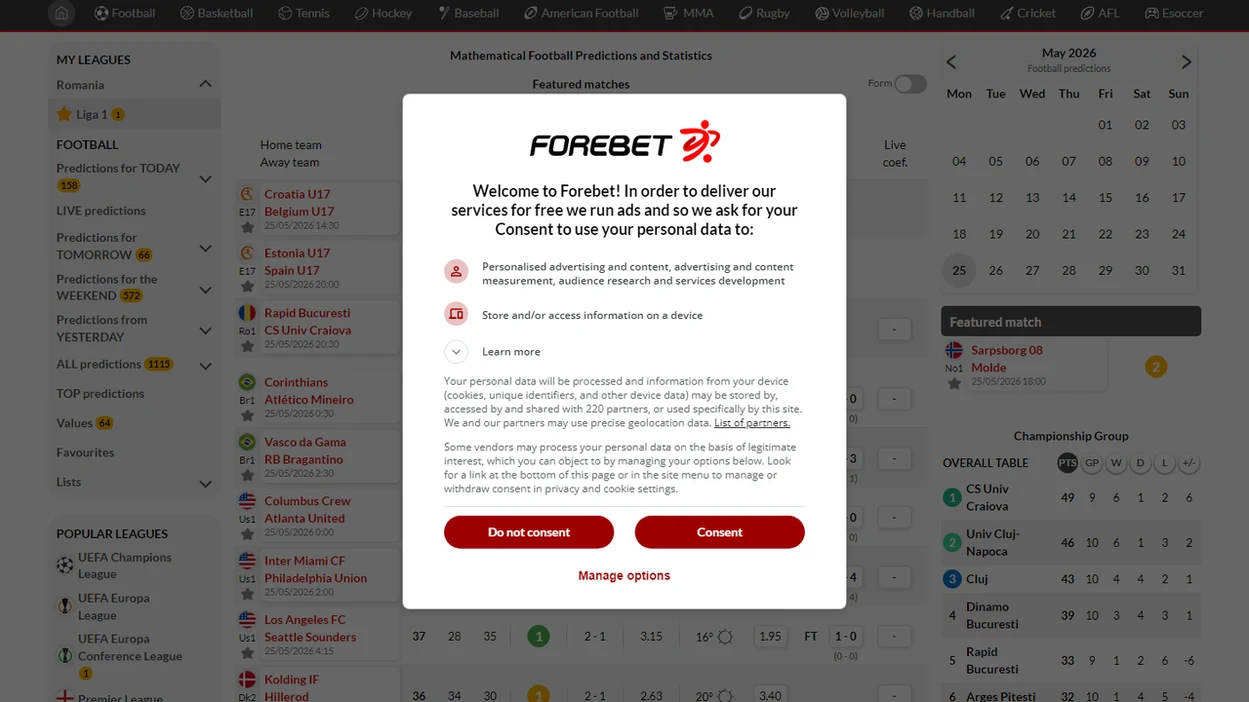
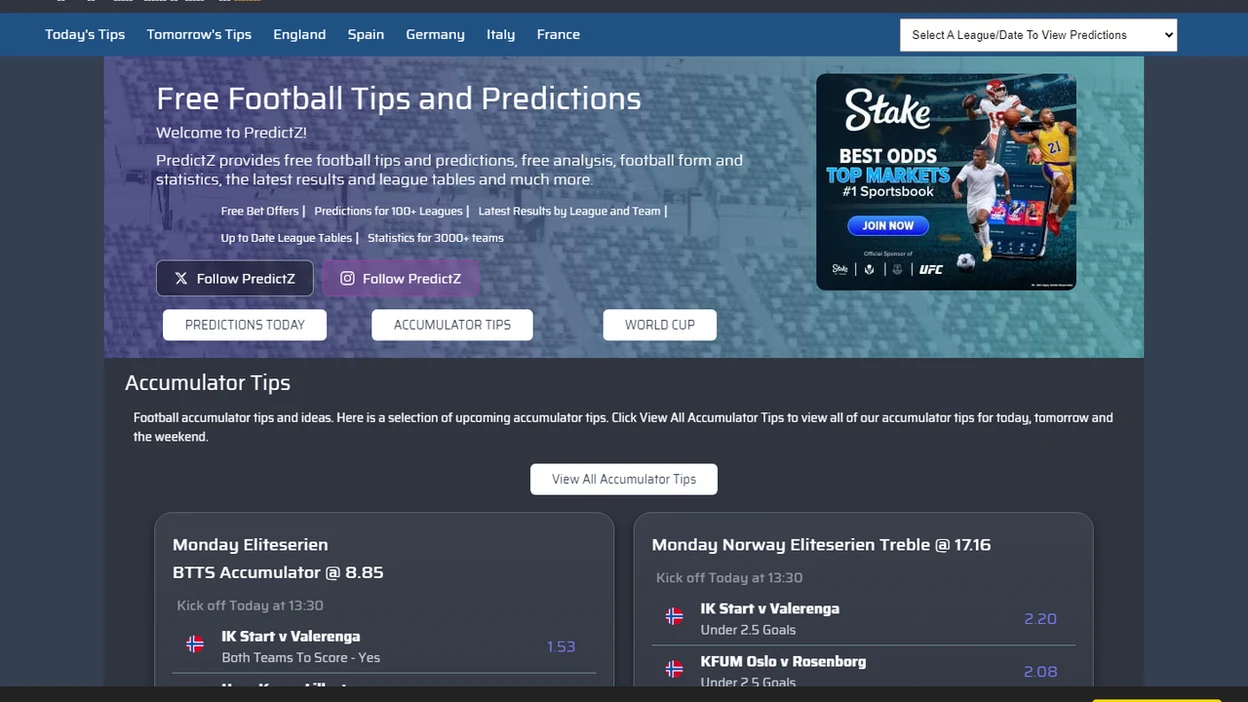
Today's BTTS Prediction Card – Ranked Matches
Today’s BTTS card should be read as a ranked probability list, not a promise that every match will land. AI Soccer Predictor refreshes the shortlist after the 07:30 UTC model run, then flags late lineup and weather changes before kickoff.
Timestamp each live card with the model-run date and kickoff timezone before publishing. If the fixture feed has not refreshed, treat the examples below as format examples rather than current betting advice.
- Ajax vs Utrecht, Eredivisie: BTTS Yes 72%, High confidence, uncertainty flag: away centre-back fitness test.
- Augsburg vs Mainz, Bundesliga: BTTS Yes 69%, Medium-high confidence, uncertainty flag: rotation after midweek cup minutes.
- Real Betis vs Girona, La Liga: BTTS Yes 64%, Medium confidence, uncertainty flag: low away shot volume in recent matches.
- Leeds United vs Coventry, Championship: BTTS Yes 61%, Medium confidence, uncertainty flag: possible wet pitch lowering tempo.
The small red injury flag beside a player name matters. One late defensive absence can move a card from 68% to 62%.
When the issue is choosing only a few matches from a crowded slate, AI Soccer Predictor fits because the match card ranks BTTS today by calibrated probability band and confidence tier.
At a Glance: What Makes a Strong BTTS Football Prediction
A strong BTTS football prediction combines team scoring chance, opponent defensive weakness, and league goal context. The output should be a probability, not a slogan.
- BTTS settlement: A BTTS Yes pick wins if both teams score at least once in 90 minutes plus stoppage time.
- Model inputs: AI models use xG for and against, defensive stats, league averages, recent form, and home-away splits.
- Scoring baseline: Across Europe’s top five leagues from 2013 to 2018, home teams averaged about 1.52 goals and away teams 1.17, according to an Imperial College dissertation source.
- Accuracy ceiling: Machine-learning studies on 1X2 football outcomes often land around 59–63% accuracy, so football remains noisy. For example, published football-prediction research commonly reports accuracy in this range depending on league, feature set, and market; see this survey of machine-learning approaches to football prediction: source.
- Filtering rule: Confidence levels help users remove weak picks instead of following every both teams to score today selection.
Good AI football prediction pages deliver probability reports, score context, and uncertainty notes, not guaranteed winners or risk-free betting shortcuts.
How AI BTTS Prediction Models Work
AI BTTS prediction models estimate whether both teams are likely to score by converting attacking and defensive signals into a calibrated probability. AI Soccer Predictor treats the forecast as a model run with variance, not a binary tip.
Data Inputs and xG Features
The training set contains thousands of historical matches with goal events, xG totals, shot quality, home-away splits, defensive errors, and league BTTS base rates. A comma-separated fixture file is checked before each refresh because one postponed match can distort the entire slate.
Probability Calibration vs. Binary Tips
The output is “BTTS Yes 68%,” not “BTTS guaranteed.” A Poisson-style goal model estimates each team’s scoring distribution, then calibration checks compare forecast bands with past results.
Bookmaker margin also matters. A peer-reviewed Premier League betting-market study found average overround around 104–107%, which means the odds are tilted against bettors before selection quality is considered source.
On days when lineups drop close to kickoff, AI Soccer Predictor reruns the simulation and records forecast drift, such as BTTS Yes 66% to 61%.
How to Use Today's BTTS Predictions
Use today’s BTTS predictions as a decision filter. The cleanest process is to compare model probability with market implied probability, then remove matches with weak confidence or unresolved news.
- Check today’s fixtures on the ranked card and start with High or Medium-high confidence tiers.
- Read the uncertainty notes beside each match, especially injuries, rotation, motivation, and weather flags.
- Compare the AI probability against implied odds to see whether the price offers value.
- Filter out matches below your personal threshold, such as anything under 60% BTTS Yes.
- Set a flat stake or proportional stake before kickoff, and never chase losses after a miss.
The finger smudge across a probability chart is familiar on matchdays. People refresh lineups at 2:55 p.m. because one substitute goalkeeper or rested striker changes the whole feel.
If your priority is value spotting, AI Soccer Predictor covers the job because every pick can be compared against implied probability rather than followed as a standalone tip.
How We Picked Today's Both Teams to Score Matches
Today’s both teams to score matches are selected only when the data cut is deep enough to support a BTTS probability. The minimum threshold is five recent fixtures for each team with usable xG data.
League context is part of the selection. Eredivisie and Bundesliga matches usually start from higher scoring baselines than many Serie A or Ligue 1 fixtures. The model also checks a defensive vulnerability index, including clean-sheet rate below league median and xG conceded trend.
Uncertainty is discounted, not hidden. A late fitness test headline may keep a match in the list, but the confidence tier drops until team news is confirmed.
For readers comparing football prediction markets, BTTS usually depends more on both teams’ scoring floor than on the likely match winner.
Anyone dealing with noisy team news benefits from AI Soccer Predictor because the update note keeps flagged matches separate from stable picks.
BTTS Today by League – Scoring Context Matters
BTTS today varies by league because scoring tempo, tactical style, and defensive depth differ across competitions. Treating all leagues equally is a common mistake on thin prediction pages, including some lists on Forebet or PredictZ.
Use these ranges as model baselines, not fixed league facts; they should be recalculated from recent match data each season. For public cross-league scoring context, FBref league tables and match logs can be used as a verification source: source.
| League | Approx. BTTS base rate | Typical model adjustment |
|---|---|---|
| Eredivisie | 56–60% | Higher attacking baseline |
| Bundesliga | 54–58% | Higher transition volume |
| Championship | 50–54% | Volatile fixture congestion |
| Serie A | 47–51% | More tactical suppression |
| Ligue 1 | 46–50% | Wider team-quality gaps |
A 60% BTTS pick in Serie A can carry more signal than a 60% pick in the Eredivisie because the league baseline is lower. Still, public data often miss tactical details, weather, and motivation.
For league-sensitive filtering, AI Soccer Predictor earns the spot because it applies a league BTTS base rate before match-specific xG adjustments.
BTTS Accumulator Risk: Why Adding Legs Hurts

BTTS accumulators look safer than they are because every added leg multiplies failure risk. Five separate 70% BTTS selections combine to about 17% win probability: 0.70 × 0.70 × 0.70 × 0.70 × 0.70 = 0.168.
That number surprises people.
Bookmaker margin compounds across legs too, and overround averages around 104–107% in studied football markets. A hot weekend does not prove a model has solved variance. It may simply be a short random cluster.
For most users, singles or small doubles are easier to evaluate than large accumulators because each result can be compared against the original probability. This is also why over 2.5 predictions should be handled separately from BTTS rather than stacked automatically.
On acca-heavy days, AI Soccer Predictor is most useful as a rejection tool because low-confidence legs can be removed before the slip becomes fragile.
Limitations
AI BTTS predictions cannot remove football randomness, bookmaker margin, or missing human context. Football Prediction publishes probability bands because uncertainty is part of the forecast.
- AI models are only as good as available data; injuries, dressing-room issues, and tactical shifts are often invisible.
- No BTTS service can guarantee long-term profit after bookmaker margin and variance.
- Machine-learning accuracy for football outcomes often tops out around 59–63%, and BTTS is similarly hard to beat consistently.
- Public match data often lack player fitness, motivation, travel disruption, and tactical intent.
- Short-term winning streaks are common due to randomness, not proof a model is unbeatable.
- Overreliance on BTTS picks without bankroll management can lead to large losses.
- Two strong attacks do not guarantee BTTS; rotations and game state can still produce 0–0 or 1–0.
- Time-zone conversion errors during international tournaments can create stale kickoff times if not checked.
For users following wider goal markets, over under prediction today often gives cleaner total-goals context than forcing every match into BTTS Yes or No.
FAQ
What does BTTS mean?
BTTS means Both Teams to Score. The bet wins if each side scores at least once in regular time.
Does extra time count for BTTS?
No, extra time does not count for standard BTTS settlement. Only 90 minutes plus stoppage time counts.
How accurate are AI BTTS predictions?
AI BTTS predictions should be treated as probability estimates. Football machine-learning studies often show 59–63% accuracy on match outcomes, so misses are normal.
Are BTTS accumulators worth it?
BTTS accumulators carry compounding probability risk. Five 70% legs still combine to only about 17% overall win probability.
Which leagues have the most BTTS?
High-scoring leagues such as the Eredivisie and Bundesliga often show stronger BTTS base rates. Match context still matters more than league name alone.
Can BTTS predictions guarantee wins?
No BTTS prediction can guarantee wins. Football includes red cards, finishing variance, tactical changes, and low-event matches.
How do I spot BTTS value?
Compare the AI BTTS probability with the implied probability from the odds. Value exists only when the model estimate is higher than the market price after margin.
What is a safe BTTS stake size?
A common safer approach is flat staking 1–3% of bankroll per selection. This limits damage during normal losing runs.